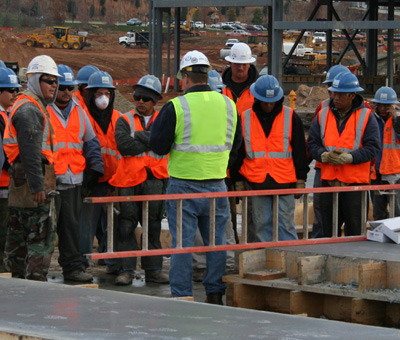
In 2007, a thought-provoking article was published in Concrete Construction magazine, challenging the traditional notion of safety in the workplace. Now, nearly twenty years on, it’s time to revisit this vital concept in light of evolving perspectives.
Today, the narrative is shifting from viewing safety as a mere priority to embracing it as a core value.
Hard Truths
The original article laid out some hard truths: the primary function of a company is to generate profit; without it, survival is impossible. It boldly acknowledged that in the realm of concrete work, the material itself sets the pace, not the workers. The same can be said for many industries, not just concrete. This frank admission set the stage for a deeper discussion on safety.
In the early 2000’s, the concept of balancing safety with production was a challenging task. The common scenario was all too familiar: safety is a priority, but under the pressure of schedules, it takes a backseat. This lead to compromised safety measures and, inevitably, accidents. This cyclical issue highlighted a fundamental flaw in how safety was perceived and integrated into work processes.
A Shift in Perspective
Today, the narrative is shifting from viewing safety as a mere priority to embracing it as a core value. Values, unlike priorities, are deeply ingrained and less susceptible to change under varying circumstances. They are the fundamental beliefs that guide our actions and decisions – the principles of honesty, faith, and family love, for example. These are values instilled in us at a young age that we carry through into our adult lives. However, values can evolve; for instance, becoming a parent often reshapes one’s values significantly.
In the workplace, if safety is instilled as a value rather than just a priority, it becomes a constant, unaffected by changing circumstances or pressures. This isn’t a straightforward transformation; it requires time, effort, and unwavering commitment to shift the organizational culture. Courses like “Servant Leadership” underline this idea, emphasizing the role of leaders in fostering a workplace safety isn’t just a policy, but a deeply held value.
This concept is echoed in Tim Russell’s book, “Wisdom of Our Fathers,” which suggests that one’s legacy is determined by others based on the values they witnessed and experienced. In the context of workplace safety, creating a value system around safety ensures that it is more than just a temporary focus—it becomes part of the organization’s DNA.
Therefore, moving safety from a fluctuating priority to a steadfast value is not just a strategic shift; it’s a cultural one. It ensures that safety is not just first in line but is an integral part of every decision and action within the organization.

How Much Safety Training Do Your Employees Really Need?
“We really don’t need much safety training.” It’s something we occasionally hear from employers. Truth be told, they may be right. Not every employee needs every safety class and not every company needs the same training program. Putting employees through training that has nothing to do with the hazards they actually face isn’t a good…
Continue Reading How Much Safety Training Do Your Employees Really Need?

Safety That Scales: Growth Without the Overhead
Companies face an interesting challenge when business begins to change. When your backlog grows, you need additional resources. When projects become more complex, you may need specialized expertise. When you expand into a new region, your existing team may suddenly be stretched across more jobsites. When you are awarded a federal contract, you may need…
Continue Reading Safety That Scales: Growth Without the Overhead

You’re OSHA Compliant. But Are You Contract Compliant?
Your company has a strong safety program and your employees are trained. Your supervisors understand OSHA requirements and you have someone responsible for safety in the field. So you’re ready for a federal construction project, right? Maybe. There’s another question worth asking: Are you prepared to meet the safety requirements of the contract itself? For…
Continue Reading You’re OSHA Compliant. But Are You Contract Compliant?